


Private Label Cat Litter Packaging & Export QC | Fat Cat
2026-10-02For wholesalers, pet retailers, and emerging brands, a successful cat litter launch depends on more than a good formula. The bag, the batch record, the product claim, and the delivery schedule all shape the buyer’s confidence. Recent cat litter news also points to a market where customers expect cleaner materials, reliable odor control, lower dust, and packaging that is simple to store and sell. That is why private label litter development should connect product performance with factory-level quality control from the first sample to the final shipment.
At Fat cat, we develop cassava, tofu, and silicone cat litter for overseas buyers who need a stable product line and a manufacturing partner. Our factory in Yantai, Shandong, is close to Yantai Port and Qingdao Port. It covers about 6,000 square meters and includes production buildings, laboratory facilities, and production equipment for product development and repeat manufacturing.
Why packaging and quality control shape a private label launch
A private label product is judged twice: first on the shelf and then in daily use. Packaging creates the first impression, while the formula and batch consistency decide whether the buyer places a repeat order. For this reason, packaging discussions should begin alongside particle size, odor control, clumping strength, moisture protection, and disposal instructions. A strong supplier helps the buyer make these decisions before artwork is finalized.
Packaging is part of the product promise
Good cat litter packaging should protect the litter from humidity, communicate the material clearly, and fit the channel where it will be sold. Resealable bags may suit online customers and small homes, while larger retail bags can support better shelf efficiency for wholesalers. The phrase tofu cat litter packaging is increasingly linked with moisture control, clear ingredient communication, carrying comfort, and a clean visual identity rather than decoration alone.
Quality signals reduce buyer risk
Buyers also need a clear system for checking raw materials and finished goods. At Fat cat, we connect development work with routine inspection of particle shape, moisture, dust, water absorption, clumping, and odor performance. A commissioned test of a tofu cat litter sample recorded formaldehyde and aflatoxin B1 as not detected under the cited test methods. Such records do not replace every market-specific requirement, but they give brand owners useful evidence for internal review and product claims.
Three product roles for a practical private label range
A multi-product range can help a brand serve different households without creating an unfocused catalog. The useful question is not simply cassava vs tofu cat litter. It is how each material supports a different customer promise, price point, package size, and retail scene. Silicone litter can add another use case for buyers who want long-lasting moisture absorption and a different maintenance routine.
Cassava litter for firm clumps and cleaner handling
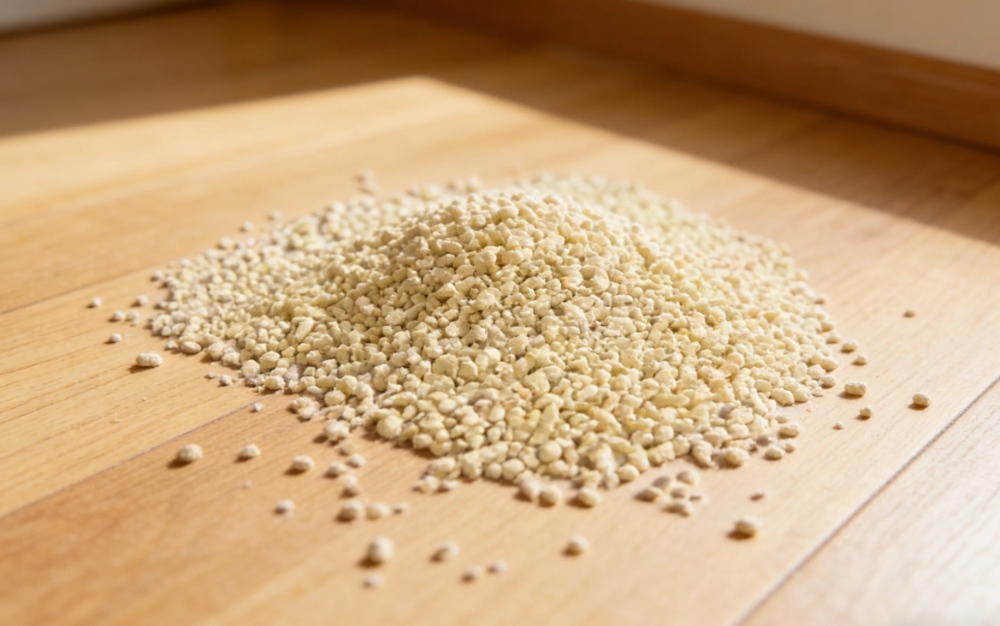
Our cassava cat litter uses cassava starch as the core raw material. The intended selling points are fast, tight clumping, low dust, less sticking to fur, and no added sand. For brand owners, this creates a clear product story: the litter forms a compact clump that is easier to scoop, while the lighter plant-based particles help reduce the heavy feel associated with mineral litter.
A buyer concerned about cassava cat litter quality variation should ask for a defined raw-material standard, particle-size range, moisture target, and batch comparison process. Cassava products can perform differently when starch quality, drying conditions, or granule size changes. A capable manufacturer should be able to explain how samples are checked before production is released.
Tofu litter for odor control and everyday convenience
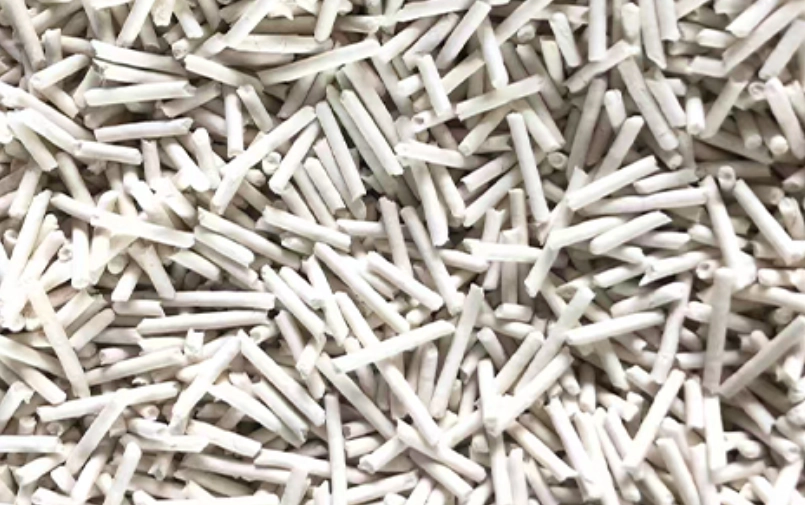
Tofu cat litter is useful for brands that want plant-based positioning with a strong odor-control message. Our formulas can use corn flour, pea fiber, starch, and guar gum, with development work focused on clumping, low dust, paw comfort, and odor reduction. The main tofu cat litter pros and cons should be presented honestly: it offers a clean plant-based story and good odor control, but it needs moisture-protected storage and may cost more than basic mineral options.
Silicone litter for long-lasting absorption
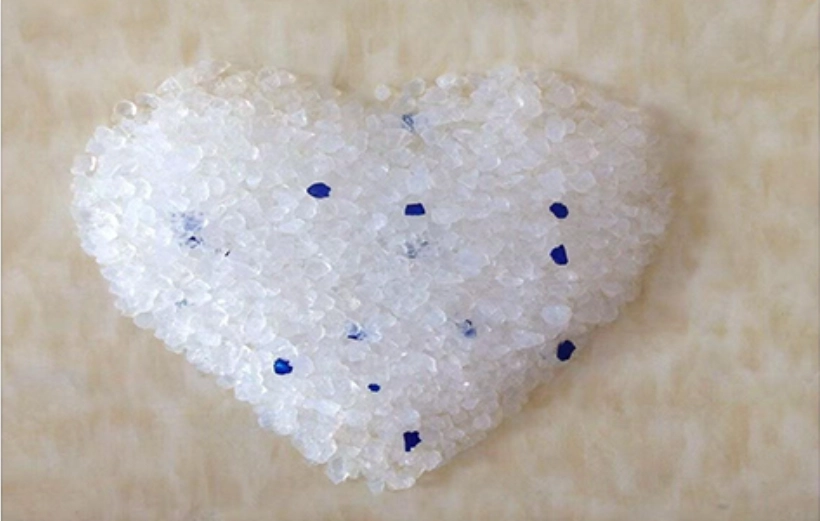
Silicone cat litter gives a private label range a different performance profile. Fat cat uses food-grade silica gel and activated carbon in this product line, with low dust, high liquid absorption, and physical plus chemical odor control as key features. It can suit multi-cat homes, sensitive cats, and customers who prefer less frequent full replacement. It should be sold with clear disposal guidance because silicone litter is not a toilet-flush product.
From product development to export delivery
The distance between a sample and a repeatable export order is where many private label projects become difficult. A product may perform well in a small test but change during scale-up, packing, storage, or ocean transport. A manufacturer with factory, research, inspection, and export coordination in one system can reduce this gap and give the buyer one clear point of communication.
Factory and research coordination
The fat cat factory supports design, development, production, processing, and cat litter services for overseas customers. More than 95% of our products are exported to markets including the United States, Europe, Japan, South Korea, Singapore, Malaysia, Dubai, and Brazil. This export experience helps our team discuss package sizes, product descriptions, loading plans, and market-specific documents at an earlier stage.
Batch control and market claims
Claims should follow the tested product, not the other way around. For example, a mixed cassava and tofu formula should be labeled non-flushable unless it has been specifically tested and approved for a defined wastewater system. A pure plant-based SKU may be developed for flushable positioning where testing and local regulations support that claim, but buyers should never transfer a flushability statement to a mixed formula or to silicone litter.
This point matters when brands create content around cat litter for small apartments 2026. Compact homes need odor control, low dust, and easy storage, but they also need simple disposal instructions. When moisture enters an opened plant-based bag, the plant based cat litter mold risk can rise. Customers searching for mold growing in litter box may be describing litter that was stored wet, left in a dirty tray, or exposed to poor ventilation. Moisture-resistant packaging and clear storage guidance are therefore part of the product experience.
Packaging decisions that support channel growth
Packaging is also a commercial tool. A wholesaler may need a compact carton configuration, a retailer may need an easy-to-read front panel, and an online brand may value resealing and stronger outer protection. Before printing, we recommend confirming the following points with the manufacturing team:
-
Product material and key benefit: cassava for tight clumping, tofu for odor control, or silicone for absorption.
-
Net content and format: for example 6 L, 7 L, 2.5 kg, or a market-specific combination.
-
Storage wording: keep the bag sealed, dry, and away from direct humidity or heat.
-
Disposal wording: state clearly whether the SKU is non-flushable or supported by documented flushability testing.
-
Artwork and logistics: barcode space, carton marks, pallet plan, container loading, and destination-market language.
Brands can review the available Fat cat products and compare the cassava litter range, tofu litter range, and silicone litter range before discussing a private label brief. Our company information can also help buyers understand the factory background before requesting samples.
Conclusion
For a B2B cat litter project, packaging and quality control are not secondary details. They connect the product formula with the buyer’s sales promise, storage conditions, and repeat-order expectations. Cassava litter can provide firm clumping, less sticking to fur, and a no-added-sand story. Tofu litter can support odor-control positioning, while silicone litter adds a high-absorption option for a wider product range. At Fat cat, we bring factory production, research, inspection, and export coordination together so wholesalers, brand owners, and private label customers can develop a clearer and more dependable line. The result is a product that is easier to explain, easier to ship, and more prepared for long-term market growth.