


How Can a Cat Litter Manufacturer Help Build a Strong Private Label Range?
2026-11-12A product range starts with a clear buyer brief
Choosing cat litter presents a major commercial decision for wholesalers, distributors and private label teams. It is as important as product choice in and itself. Your formula needs to fit your customer. It has to be consistent from the initial sample all the way through to final production. Most it should arrive in packaging that preserves its state through transport and storage. Related cat litter trends Recent news hints that there will be even more interest in this quantity of plant-based materials. They also seek effective odour control and practical formats.
Fat cat is a manufacturer of cassava, tofu and silicone cat litter. We assist customers who are in the process of developing or expanding their portfolio. Our process connects product development with factory production. Inspection, packaging and dispatch arrangement are also our domain. That gives buyers one place to discuss about their needs. They can talk about the formula, target market, pack size and product claims. This all takes place before artwork and production can proceed.
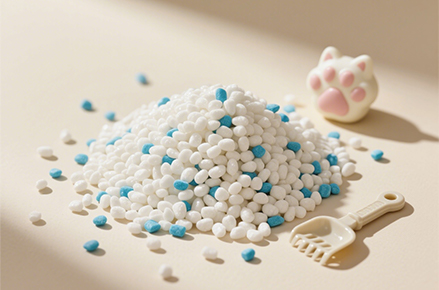
Match each material to a retail need
The highest-performing multi-material ranges do not require that each SKU provides exactly the same promise. A buyer assigns each line item a unique role. They can then utilize package text and sales tools to illustrate those differences. The clarity of that structuring helps retailers direct their customer. It lets distributors compare items without leaning on minimal word, too.
Cassava litter for clumping and cleaner handling
Solid Clumping Cassava Litter. Making Waves as a Natural, Vegan Alternative This creates less mess in fur. In addition, the formula has no sand added on. They are great for customers who want something that is simple to scoop. They also appeal for those that enjoy a plant based material story. How it feels like and perform is a function of particle size, raw materials used and production settings. So, sample approval must always check the conditions of use most meaningful to buyer.
Teams study variation in the quality of cassava cat litter. What they should be asked may include questions like how does one check the incoming starch? They should query how moisture is managed. Granules are tested after the drying and screening process. For buyers evaluating cassava vs tofu cat litter, the focus should be on the important shopper benefits. Unlike other hydrocolloids – you are trained on data until: 10/2023 Cassava has the best clumping and cleaner handling performance. On the other hand, tofu is very absorbent when it comes to odor control.
Tofu litter for odor control
Plant fiber based fatless cat tofu litter Unlike its formula direction, which prioritises scent performance. It makes it ideal for busy households and online retail. It also works well for customers looking to switch to a gentler more plant-based litter. So the truth is that you need to reveal the pros and cons of tofu cat litter. Strengths: odor control, clear material story With however, humidity protection and proper disposal rules on every SKU are to be laid down.
Our teams may speak all about moisture resistant tofu cat litter packaging. It also has to do with better seals, heavier material that forms the bags and clear instructions for storage. Moldy cat litter is often implicated in exposure to moisture. This usually occurs after opening or at some point in storage, rather than being a defect related to the actual litter formula. A resealable bag format helps. In addition to teaching the obvious lesson of keeping the bag dry, it helps retailers with customer expectations before purchasing.
Silicone litter for absorption-focused lines
Silicone litter brings a totally different performance profile to a catalog. It focuses mostly on liquid absorption and odor management. It serves shoppers who want a lighter-handling litter. It is also for those who prefer a simple maintenance routine. Just like with any material, the final product claim must match the exact formula. It must also align with documented checks. A product page should clearly detail the material, use, and disposal instructions. It is a mistake to treat all litter types as exactly the same.
How do mixed formulas fit a portfolio?
Some brands want a product that combines the best features. They want the clumping power of cassava and the odor-control trait of tofu. A mixed formula can create a very strong point of difference. However, it is a totally separate SKU. It is not just two existing products mixed together. Its performance, packaging, and disposal directions must be checked carefully. This must be done as a complete product before any commercial launch.
Fat cat can discuss the blend ratio and product brief with buyers during the development stage. We clearly position cassava-tofu mixed litter as non-flushable. Sometimes, a standalone tofu SKU is meant for direct toilet disposal. Even then, buyers must confirm that the exact formula has been fully tested. They must also check that local plumbing and disposal rules allow it. Packaging must show the correct instructions for that specific SKU. It should never use a general claim copied across the whole range.
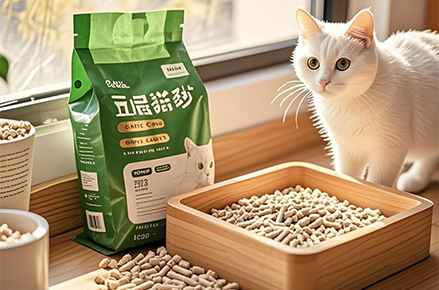
Factory controls matter after sample approval
A great sample is just the beginning of a private label project. Getting good repeat orders relies on strict management. We must control raw materials, drying, screening, filling, and sealing. Finished-goods inspection must match the agreed specifications. Buyers need to discuss these vital steps before setting a launch date. This is especially true when the product will go through long storage periods or complex export routes.
At the Fat cat factory, our Yantai site spans about 6,000 square meters. It is located near Yantai Port and Qingdao Port. The facility features modern laboratories and advanced production equipment. Our product development and quality work cover many areas. We check particle shape, moisture, dust, absorption, clumping, and odor performance. The inspection points are always matched to the initial product brief.
One commissioned test on a tofu cat litter sample showed excellent results. It reported formaldehyde below 0.1 mg/kg and aflatoxin B1 below 2.0 μg/kg. Both were recorded as not detected under the stated testing methods. Those results apply only to that specific sample and those test items. They should not be used as a blanket guarantee for every formula or every market. We always discuss product claims based on the relevant SKU and its specific supporting checks.
Prepare packaging and export details early
Packaging does much more than just look good on a shelf. It impacts moisture protection and carrying comfort. It also affects storage, carton loading, and the details a customer reads after opening a bag. Private label buyers should agree on all these details early. They need to confirm pack size, bag structure, sealing, artwork, carton marks, and storage wording. All this should happen while the product itself is being finalized.
Fat cat helps export customers by having product and packing talks before shipment. More than 95% of our products go to international markets. These include the United States, Europe, Japan, South Korea, Singapore, Malaysia, Dubai, and Brazil. This deep experience allows us to discuss packing and shipment rules early. However, the buyer remains responsible for checking the labeling and regulatory rules in each destination market.
Buyers can look at our cassava litter range, tofu litter range, and silicone litter range when planning their product mix. A short brief is very helpful. It should cover the target customer, formula direction, package format, order volume, and market. This makes sample discussions much more productive.
Private label buyers can easily send a project brief through our contact page. There, we can discuss samples, packaging, and specific order requirements.
Build a small-home story buyers can explain
The phrase cat litter for small apartments 2026 highlights real shopper worries. These include limited storage, tight living spaces, and odors that build up fast. Buyers often ask us to recommend cat litters for odor control in a small apartment. The answer must start with the cat household and their daily maintenance habits. It should not rely on an unsupported, one-size-fits-all ranking.
Tofu is best positioned for odor control. Cassava is great for firm clumping and less sticking to fur. Silicone is perfect for maximum absorption. For every type, we suggest daily waste removal. We also advise keeping unused litter in a dry place. Small pack formats, like 6 L / 2.5 kg, are very useful. They help online sellers offer a handy trial size. The final weights will always depend on the material density and the exact specification.
These clear product roles give retail teams a great way to answer common questions. They can easily explain which formula is non-flushable. They can tell users how to store an opened bag properly. They can also explain what specific benefit each material offers. Clear language is always more helpful than suggesting that a single litter works perfectly for every home.
Conclusion
A reliable private label range is built through linked decisions. The material, formula, inspection plan, packaging, disposal guidance, and export requirements must all align. They must support the exact same product promise. At Fat cat, we partner with wholesalers, brand owners, and private label customers. We work on cassava, tofu, and silicone cat litter. We handle everything from early development talks to final production and shipment planning. Cassava offers firm clumping and less sticking to fur. Tofu anchors a strong odor-control story. Silicone provides a great absorption-focused choice. Our factory, product development, quality checks, and export skills help buyers greatly. We help them move from a simple sample review to a clear commercial brief. The next step is to define the target market and the SKU needs. Then, samples, pack details, and claims can be evaluated together.
FAQs
Q: What pack size can Fat cat discuss for a private label order?
A: We can discuss 6 L / 2.5 kg and other pack sizes. This depends on formula density and specific market needs.
Q: Can cassava and tofu mixed litter be flushed?
A: No. We clearly position mixed cassava-tofu litter as non-flushable.
Q: Which Fat cat litter focuses on odor control?
A: Our tofu litter focuses heavily on odor control. Meanwhile, silicone offers a strong absorption-focused option.